
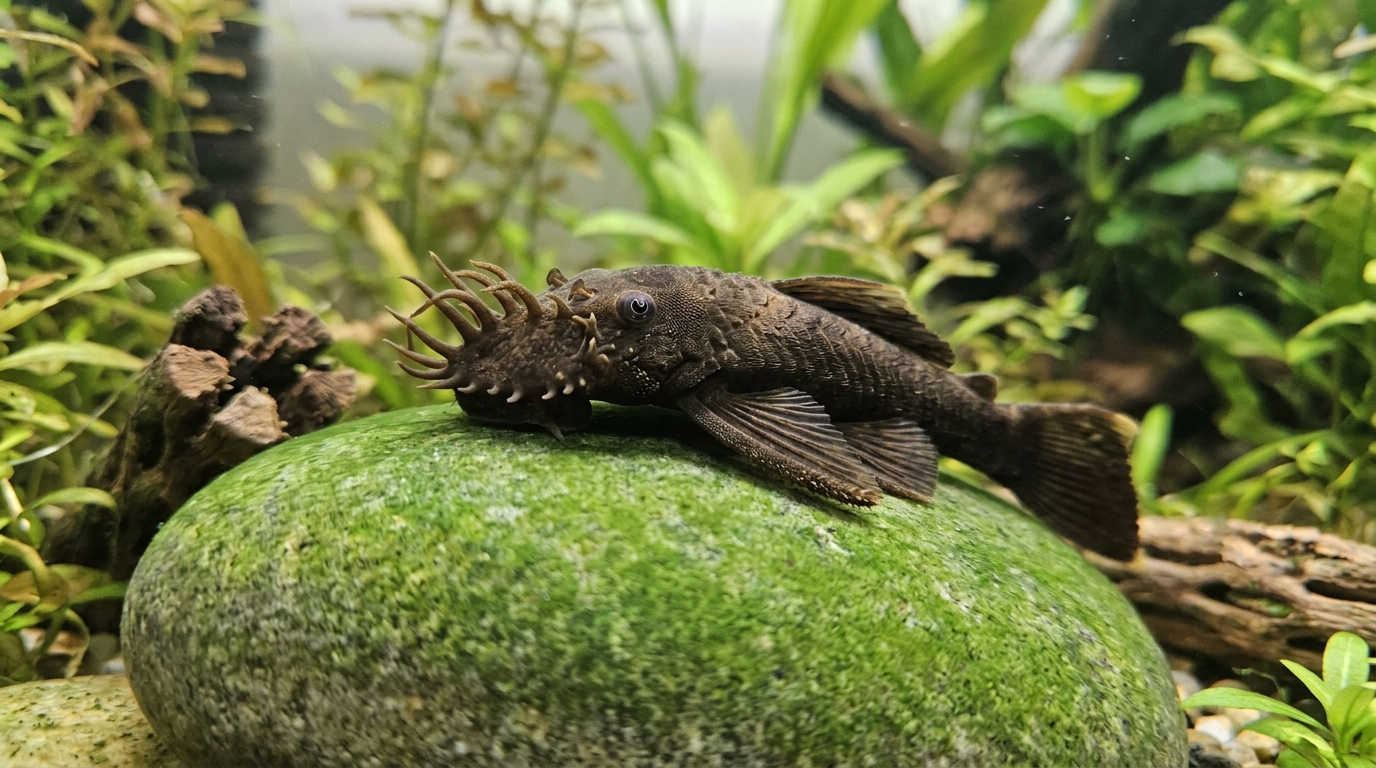
What Makes the Bristlenose Pleco Unique
The bristlenose pleco stands out from other catfish species because of the distinctive bristle-like appendages that grow around its nose and face, particularly in males. These bristles become more prominent as the fish matures and are one of its most recognizable features. Native to South American rivers and streams, this species has adapted well to aquarium life. Its flattened body, armored plates, and sucker-like mouth allow it to cling to surfaces while feeding. The combination of unusual physical characteristics and practical benefits for aquarium maintenance has contributed to the widespread popularity of the bristlenose pleco among fish hobbyists worldwide.
Natural Habitat and Origin
The bristlenose pleco originates from freshwater waterways across South America, where it inhabits rivers, streams, and tributaries with moderate water flow. These environments are often rich in submerged wood, rocks, and vegetation that provide shelter and feeding opportunities. In the wild, the fish spends much of its time attached to surfaces while grazing on algae and organic matter. The natural habitat typically features stable water conditions with ample oxygen and hiding places. Replicating these environmental factors in an aquarium helps support the fish’s overall well-being and encourages natural behaviors that contribute to a healthier and more active lifestyle.
Ideal Aquarium Setup
Creating the right aquarium environment is essential for the long-term health of a bristlenose pleco. A tank of at least twenty gallons provides sufficient space for a single adult fish, though larger tanks are preferable for community setups. Driftwood is particularly important because it serves both as shelter and a source of dietary fiber. Smooth rocks, caves, and dense plants help create secure hiding areas where the fish can rest during the day. Maintaining stable water parameters, moderate filtration, and proper oxygenation closely mimics natural conditions. A well-designed aquarium not only supports physical health but also reduces stress and promotes natural activity.
Feeding and Nutritional Requirements
Although the bristlenose pleco is widely known as an algae eater, algae alone cannot provide complete nutrition. A balanced diet should include high-quality sinking pellets, algae wafers, and fresh vegetables such as zucchini, cucumber, spinach, and peas. Driftwood also contributes to digestive health by supplying necessary fiber. Feeding a varied diet ensures the fish receives essential nutrients required for growth, immune function, and overall vitality. While it will actively consume algae present in the aquarium, relying solely on natural algae growth may lead to nutritional deficiencies. Consistent and diverse feeding practices contribute significantly to maintaining a healthy and active fish.
Behavior and Temperament
The bristlenose pleco is generally peaceful and well-suited for community aquariums containing other non-aggressive fish species. It spends much of its time exploring surfaces, grazing on algae, and resting in sheltered areas. While typically calm, males may become territorial toward other male bristlenose plecos, especially when space is limited. Providing multiple hiding places can help minimize territorial disputes and reduce stress. The fish is primarily nocturnal, becoming more active during evening hours and low-light conditions. Its non-aggressive nature and useful cleaning habits make it an attractive option for aquarists seeking a practical yet visually interesting aquarium inhabitant.
Water Conditions and Maintenance
Maintaining proper water quality is crucial for the health of a bristlenose pleco. The species generally thrives in temperatures ranging between 72 and 82 degrees Fahrenheit, with a pH level that remains relatively stable. Regular water changes help remove accumulated waste and maintain optimal conditions. Because plecos produce a considerable amount of waste, efficient filtration is important for preserving water clarity and quality. Monitoring ammonia, nitrite, and nitrate levels helps prevent harmful fluctuations that could impact fish health. Consistent maintenance routines create a stable environment where the bristlenose pleco can remain healthy, active, and resistant to common aquarium-related issues.
Breeding Bristlenose Plecos
Breeding a bristlenose pleco in captivity is often considered easier than breeding many other aquarium fish species. Mature males use caves or enclosed spaces as nesting sites, where females deposit their eggs after spawning. Once the eggs are laid, the male typically assumes responsibility for guarding and caring for them until they hatch. Stable water conditions, proper nutrition, and suitable breeding caves significantly increase the chances of successful reproduction. The fry usually emerge within a week and begin feeding on algae, vegetables, and specialized foods shortly afterward. Their relatively straightforward breeding process makes them popular among aquarists interested in fish reproduction.
Common Health Concerns
Like all aquarium fish, the bristlenose pleco can experience health issues if environmental conditions are poor or nutrition is inadequate. Common concerns include bacterial infections, fungal growth, digestive problems, and stress-related illnesses. Many of these issues can be prevented through proper tank maintenance, high water quality, and a balanced diet. Observing changes in behavior, appetite, or appearance allows aquarists to identify potential problems early. Quarantining new fish before introducing them to the main aquarium can reduce the risk of disease transmission. Preventive care remains the most effective approach to maintaining the long-term health and vitality of these resilient fish.
Why the Bristlenose Pleco Is a Popular Choice
The enduring popularity of the bristlenose pleco stems from its combination of practicality, manageable size, and unique appearance. Unlike larger pleco species that require very large aquariums, this fish remains suitable for many home setups. Its ability to help control algae growth adds functional value while reducing maintenance demands. The fish’s peaceful temperament also allows it to coexist with a wide variety of community species. Combined with its hardiness and relatively simple care requirements, these qualities make it an appealing option for aquarists of all experience levels. Its distinctive look further enhances its appeal as an aquarium centerpiece.
Conclusion
The bristlenose pleco is an exceptional freshwater fish that offers both beauty and functionality within a home aquarium. Its distinctive facial bristles, algae-eating habits, peaceful personality, and manageable size make it a highly desirable species for fish keepers around the world. Providing a suitable habitat, balanced nutrition, and stable water conditions helps ensure long-term health and well-being. Whether you are a beginner building your first aquarium or an experienced hobbyist seeking a reliable algae grazer, the bristlenose pleco remains one of the most rewarding and practical additions to a freshwater tank.