
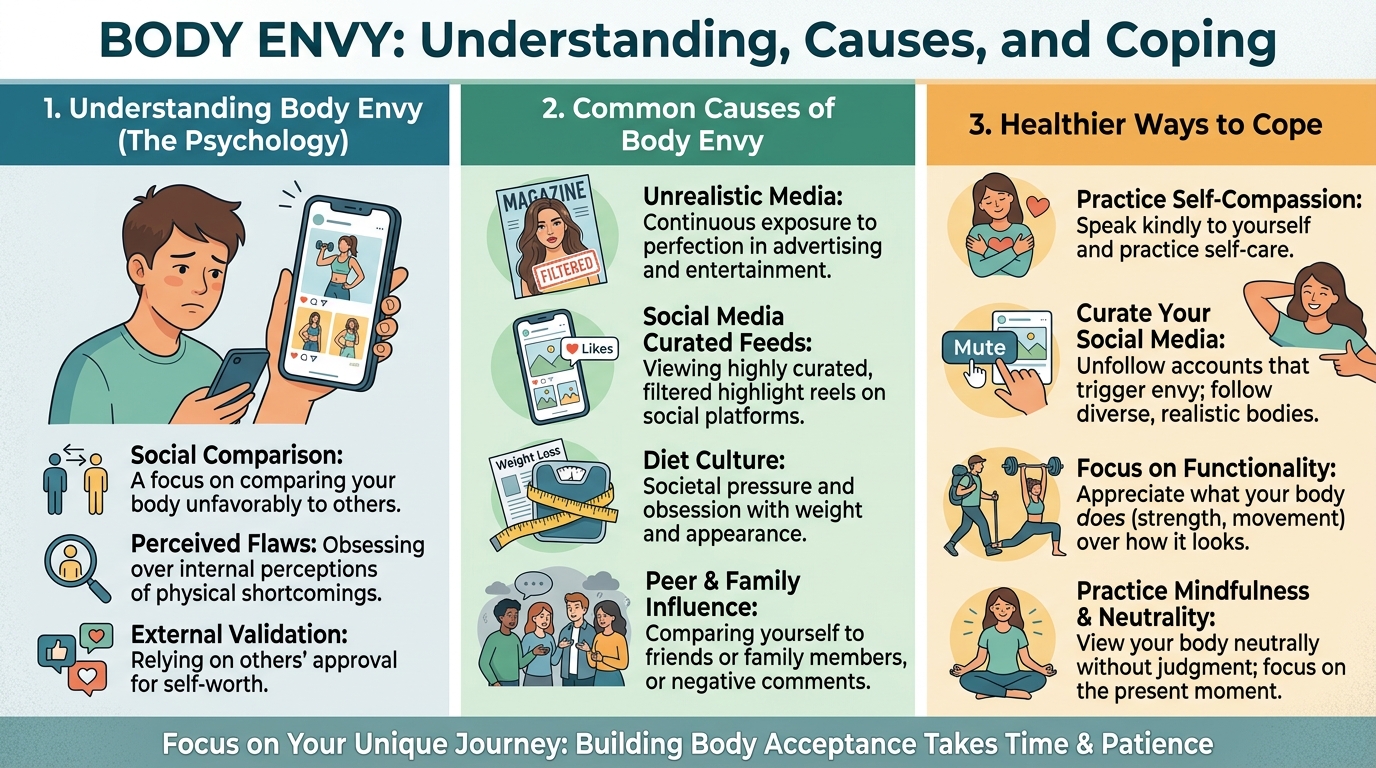
Body envy is a growing emotional experience in today’s image-focused world, where social media, advertising, and cultural expectations constantly shape how people view themselves and others. It refers to the feeling of comparison, dissatisfaction, or longing when someone perceives another person’s physical appearance as more attractive or desirable. While occasional comparison is natural, persistent body envy can affect mental health, self-esteem, and daily confidence. Understanding this emotional response is important because it helps individuals recognize harmful thought patterns and develop healthier ways of thinking about their own bodies. By exploring its causes and effects, people can learn to build a more positive self-image.
What Body Envy Really Means
Body envy describes the emotional discomfort that arises when someone compares their physical appearance with others and feels lacking in some way. It often develops when individuals repeatedly see idealized body types in media or real life, leading to unrealistic expectations about their own appearance. This feeling is not limited to one gender or age group, as anyone can experience it under certain conditions. While mild comparison is normal, body envy becomes concerning when it affects self-worth or daily behavior. Understanding its meaning helps people identify when comparison shifts from harmless observation to emotional distress that impacts confidence and mental well-being.
How Social Media Influences Body Envy
Social media plays a major role in increasing body envy by constantly exposing users to edited, filtered, and curated images of idealized lifestyles and bodies. Platforms often highlight physical perfection, which can distort reality and create unrealistic beauty standards. When individuals spend significant time comparing themselves to influencers or celebrities, feelings of dissatisfaction may increase. The constant stream of ideal images can make ordinary appearances feel inadequate by comparison. However, recognizing that most online content is carefully selected or enhanced helps reduce its emotional impact. Awareness of digital manipulation is an important step in reducing body envy in everyday life.
Psychological Causes Behind Body Envy
Body envy is often rooted in deeper psychological factors such as low self-esteem, insecurity, and past experiences related to appearance or acceptance. People who struggle with self-worth may be more sensitive to external comparisons and more likely to internalize negative thoughts about their bodies. Childhood experiences, peer pressure, and societal expectations can also contribute to these feelings over time. Cognitive patterns that focus on flaws rather than strengths further reinforce dissatisfaction. Understanding these underlying causes helps individuals recognize that body envy is not simply about appearance but also about emotional and psychological well-being that develops through personal history and environment.
The Role of Cultural Beauty Standards
Cultural beauty standards significantly influence how people perceive their own bodies and others around them. Different societies promote specific ideals regarding body shape, skin tone, height, or facial features, often through media, fashion, and entertainment industries. These standards can shift over time but consistently create pressure to meet certain expectations. When individuals feel they do not match these ideals, body envy may develop as a response to perceived inadequacy. However, beauty is diverse and varies across cultures and communities. Recognizing the artificial nature of many standards helps people appreciate individuality and reduces the emotional impact of comparison.
Emotional Effects of Body Envy
Body envy can lead to a range of emotional responses, including sadness, frustration, anxiety, and decreased self-confidence. Over time, these feelings may affect how individuals interact socially, make decisions, or engage in activities they once enjoyed. In some cases, persistent comparison may contribute to negative self-talk or avoidance of social situations. It can also influence eating habits or exercise behaviors in unhealthy ways if not addressed properly. Acknowledging these emotional effects is important because it encourages early awareness and intervention. Developing emotional resilience helps individuals manage these feelings in a healthier and more constructive manner.
How Body Envy Impacts Self-Esteem
Self-esteem is closely linked to how individuals perceive their physical appearance, making body envy a significant factor in self-confidence levels. When people constantly compare themselves to others, they may begin to undervalue their own qualities and strengths. This can lead to a cycle of self-criticism that reinforces negative thinking patterns. Over time, reduced self-esteem can affect personal relationships, work performance, and overall life satisfaction. However, building self-esteem through positive reinforcement, self-awareness, and supportive environments can reduce the impact of body envy. Learning to appreciate personal uniqueness helps restore confidence and encourages a more balanced self-view.
Healthy Ways to Reduce Body Envy
Reducing body envy involves shifting focus from comparison to self-acceptance and personal growth. One effective approach is practicing gratitude for what the body can do rather than how it looks. Limiting exposure to unrealistic media content also helps reduce triggers that lead to comparison. Engaging in activities that build confidence, such as exercise, hobbies, or skill development, can strengthen self-worth. Surrounding oneself with supportive and positive influences further encourages healthier thinking patterns. Over time, these habits help reframe how individuals view themselves, making it easier to appreciate personal qualities without constant comparison to others.
Building a Positive Body Image
Developing a positive body image is an important step in overcoming body envy and improving emotional well-being. It involves accepting one’s physical appearance while recognizing that worth is not defined by looks alone. Positive self-talk, mindfulness practices, and focusing on inner qualities such as kindness, intelligence, and creativity can help shift attention away from appearance-based judgment. Accepting imperfections as a natural part of being human also supports a healthier mindset. When individuals learn to value themselves beyond physical attributes, they become less affected by comparison and more confident in their unique identity and personal journey.
Long-Term Strategies for Emotional Balance
Maintaining emotional balance in relation to body envy requires consistent effort and self-awareness. Long-term strategies include setting realistic expectations, practicing self-compassion, and developing critical awareness of media influences. Building strong personal values that are not based on appearance helps create a stable sense of identity. Regular reflection on personal achievements and strengths can also reinforce positive self-perception. Over time, these practices reduce the frequency and intensity of comparison-based thoughts. Emotional balance is not achieved overnight but through ongoing commitment to healthier thinking patterns that support mental well-being and long-lasting self-acceptance.
Conclusion
Body envy is a common emotional experience shaped by social influences, cultural standards, and personal psychology. While it can negatively affect confidence and mental well-being, it is possible to manage and reduce its impact through awareness and intentional change. Understanding its causes helps individuals recognize harmful comparison patterns and shift toward healthier thinking. By focusing on self-acceptance, emotional resilience, and positive habits, people can build a more balanced and confident self-image. Ultimately, overcoming body envy is about learning to value oneself beyond appearance and embracing individuality as a source of strength and authenticity.