
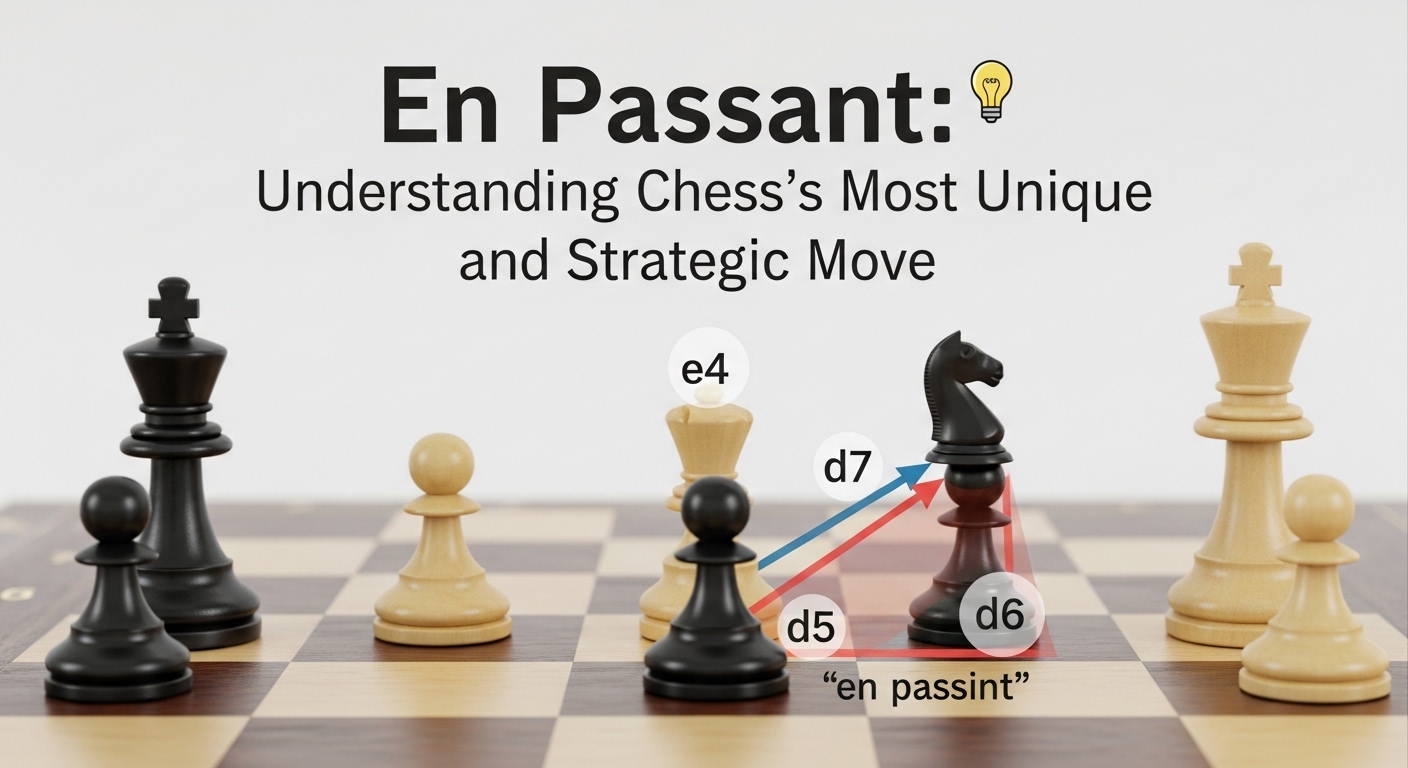
Chess is a game filled with timeless rules, deep strategy, and fascinating moves, but few are as intriguing as en passant. Often misunderstood by beginners and sometimes forgotten even by experienced players, en passant is one of the most unique rules in the game. It applies only to pawns and can dramatically change the flow of a match when used at the right moment. Because of its rarity and strategic value, many players actively study this move to improve their tactical awareness. Understanding en passant is essential for anyone who wants to strengthen their chess knowledge and gain an edge in competitive play.
What En Passant Means in Chess
En passant is a special pawn capture rule in chess that allows a pawn to capture an opposing pawn under specific conditions. The phrase comes from French and means “in passing,” which accurately describes how the move works. If an opponent moves a pawn forward two squares from its starting position and lands beside your pawn, your pawn may capture it as though it had moved only one square. This capture must happen immediately on the very next move. If the opportunity is missed, the right to perform en passant disappears. This rule adds both realism and strategic depth to the game.
The Historical Origin of En Passant
The rule of en passant was introduced centuries ago as chess evolved into the modern game we know today. When pawns were originally allowed to move two squares on their first move, players noticed that this could let them bypass potential captures too easily. To balance the game and preserve tactical fairness, the en passant rule was created. It ensures that pawns cannot escape pressure simply by advancing two squares in one move. This historical adjustment helped maintain the strategic integrity of pawn structures and continues to be an important part of official chess rules worldwide.
How the Move Works
To perform en passant, a very specific set of conditions must be met. First, your pawn must already be positioned on its fifth rank. Then, your opponent must move a pawn two squares forward from its starting position so that it lands directly next to your pawn. On your very next move, you may capture that pawn diagonally as if it had advanced only one square. The captured pawn is removed from the board. This move cannot be delayed, as the right to use en passant exists only for one turn. This immediate decision adds a tactical layer to the game.
Why En Passant Is Important Strategically
En passant may seem like a rare technical rule, but it carries significant strategic importance. It can break an opponent’s pawn formation, open lines for other pieces, and prevent pawns from advancing too freely. Skilled players use it not only for material gain but also for positional advantages. Sometimes the threat of en passant alone can influence an opponent’s decision-making. Because pawns often determine the long-term structure of a chess game, understanding how en passant affects pawn play is essential. It adds depth to opening strategies, middle-game tactics, and even endgame calculations.
Common Mistakes Players Make
Many beginners either forget the en passant rule or misunderstand when it can be used. One of the most common mistakes is attempting the move after waiting more than one turn. Since en passant must be played immediately, any delay makes it illegal. Another mistake is trying to use it when the opposing pawn moved only one square instead of two. Some players also overlook opportunities because they are too focused on other pieces. Learning the exact conditions and practicing real board scenarios can help prevent these errors and improve overall chess awareness.
En Passant in Competitive Chess
In competitive chess, en passant is recognized as a fully legal and official move under international rules. Tournament players must be aware of it, as missing the opportunity can sometimes alter the result of a game. At advanced levels, opponents often use en passant as part of broader tactical combinations involving rooks, bishops, or queens. Even though it does not occur in every match, experienced players remain alert for the possibility. In timed games, quick recognition of en passant opportunities can offer both tactical and psychological advantages, especially in closely contested positions.
Learning En Passant as a Beginner
For new chess players, en passant may initially seem confusing because it differs from standard capture rules. However, once the concept is understood, it becomes much easier to remember. The best way to learn it is through repeated examples and practical play. Many chess apps and online platforms include lessons specifically focused on special moves like castling and en passant. Visual learning often helps beginners understand why the move exists and when it should be used. Mastering this rule early can build confidence and improve a player’s understanding of pawn strategy.
How It Influences Pawn Structure
Pawn structure is one of the most important elements of chess strategy, and en passant can have a direct impact on it. By removing a pawn unexpectedly, the move can create open files, isolated pawns, or doubled pawns that influence the entire position. Sometimes a well-timed en passant opens a path for a rook or bishop to become active. In other cases, it weakens an opponent’s center control. Because pawn formations often determine long-term plans, this move can shape the direction of the game far beyond the immediate capture itself.
Conclusion
En passant remains one of the most fascinating and strategically rich rules in chess. While it may appear unusual at first, it plays an important role in maintaining fairness and adding tactical complexity to the game. From its historical origins to its modern use in competitive play, en passant continues to be an essential concept for players at every level. Learning when and how to use it can improve pawn strategy, tactical awareness, and overall chess performance. For anyone serious about mastering the game, understanding en passant is a crucial step toward becoming a stronger player.