
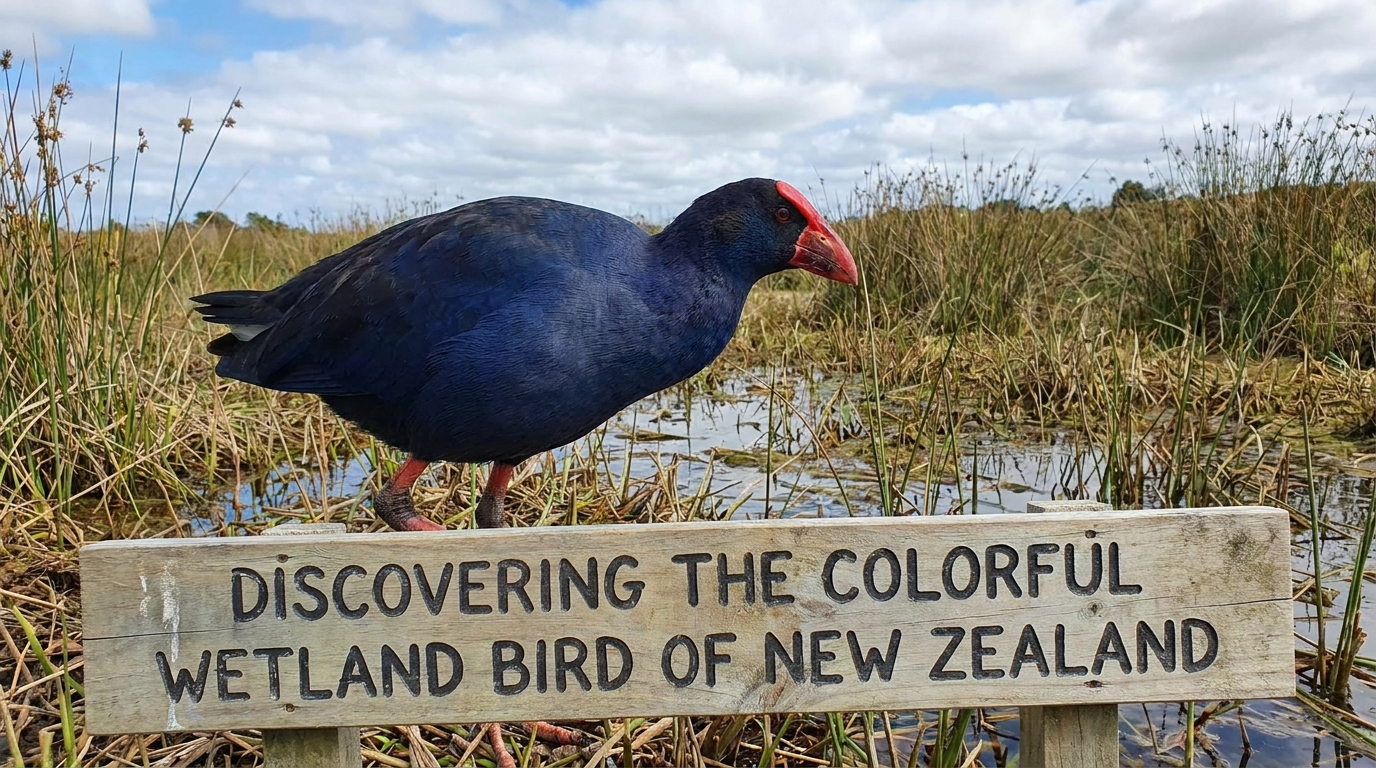
Physical Appearance of the Pukeko Bird
The pukeko bird stands out immediately because of its bold and colorful appearance. It has deep blue and black feathers covering most of its body, along with a bright red beak and frontal shield that make it highly recognizable. Its long reddish legs and large feet allow it to move easily through wetland environments and grassy terrain. The bird’s body structure is strong and slightly rounded, giving it a confident and energetic look while walking or searching for food. Many people are attracted to the pukeko bird because its vibrant colors create a striking contrast against green landscapes. This unique appearance makes the bird one of the most visually memorable species in its natural habitat.
Natural Habitat of the Pukeko Bird
The pukeko bird is commonly found in wetlands, marshes, lakesides, and grassy open areas where water and vegetation are easily available. These environments provide the bird with shelter, nesting spaces, and access to food sources. Although wetlands remain the preferred habitat, the pukeko bird has shown strong adaptability and can also survive in farmland, parks, and roadside vegetation. Its ability to adjust to different environments has contributed to its widespread presence across New Zealand and nearby regions. The bird usually stays close to water because wetlands support the insects, plants, and small organisms it feeds on regularly. Healthy wetland ecosystems remain important for maintaining stable pukeko bird populations in nature.
Feeding Habits and Diet of the Pukeko Bird
The pukeko bird is an omnivorous species, meaning it eats both plant material and small animals depending on food availability. Its diet commonly includes grass shoots, seeds, insects, frogs, and small aquatic creatures found near wetlands. The bird uses its strong beak and long toes to search through vegetation and muddy ground while feeding. Sometimes the pukeko bird can also be seen feeding in gardens or agricultural areas where food is easily accessible. This flexible diet helps the species survive in changing environmental conditions. Because the bird adapts its feeding habits according to seasonal food availability, it remains highly successful in a variety of natural and human-influenced habitats throughout its range.
Social Behavior and Group Living
One of the most interesting characteristics of the pukeko bird is its highly social nature. These birds are often seen living in family groups or small communities that work together for protection and survival. Group living allows them to defend territory, raise chicks, and locate food more effectively. The pukeko bird communicates using loud calls and body movements that help maintain social connections within the group. Young birds are frequently cared for not only by parents but also by other adult members of the group. This cooperative behavior makes the species unique compared to many other wetland birds. Observing their interactions provides insight into the importance of teamwork and communication in wildlife communities.
Breeding and Nesting Patterns
The breeding behavior of the pukeko bird is another fascinating aspect of its life cycle. During the breeding season, these birds build nests using grass and reeds in hidden wetland areas close to water. The nests are carefully constructed to protect eggs and chicks from predators and environmental conditions. Female pukeko birds typically lay several eggs, and both parents participate in protecting and caring for the young. In some social groups, additional adult birds may also help raise chicks. This cooperative nesting system increases the survival chances of the offspring. Young pukeko birds grow quickly and learn important survival skills by observing adult members within their social group and natural habitat.
Cultural Importance of the Pukeko Bird
The pukeko bird holds cultural significance in New Zealand and is often associated with local traditions, stories, and artistic representations. Its distinctive appearance and behavior have made it an important symbol within regional wildlife identity. The bird frequently appears in children’s books, educational materials, artwork, and nature photography because of its recognizable colors and energetic personality. Many people living near wetlands are familiar with the pukeko bird and consider it an important part of the natural environment. Its presence also reflects the health of local ecosystems because wetland birds depend heavily on balanced environmental conditions. Cultural appreciation for the species helps encourage conservation awareness and public interest in protecting wildlife habitats.
Challenges Facing the Pukeko Bird
Although the pukeko bird remains relatively widespread, it still faces several environmental challenges that can affect its population and habitat quality. Wetland destruction caused by urban development, agriculture, and pollution reduces the natural environments where these birds feed and breed. Predators introduced into certain ecosystems may also threaten eggs and young chicks. Climate changes affecting water levels and vegetation growth can influence food availability and nesting conditions. Despite these pressures, the pukeko bird has demonstrated remarkable adaptability in many regions. Conservation efforts focused on protecting wetlands and maintaining healthy ecosystems continue to support stable populations. Preserving natural habitats remains essential for ensuring the long-term survival of this colorful wetland species.
Why Birdwatchers Enjoy Observing the Pukeko Bird
Birdwatchers and wildlife photographers are especially drawn to the pukeko bird because of its vivid colors, social behavior, and active movement patterns. The bird is often easy to spot in wetland areas due to its bright red beak and strong blue feathers. Observing pukeko birds interacting within groups provides fascinating opportunities to study communication, feeding, and nesting behavior in natural environments. Their energetic personalities and confident movements also make them appealing subjects for photography. Many nature enthusiasts appreciate the bird because it represents the beauty and diversity of wetland ecosystems. The growing popularity of birdwatching tourism has further increased public interest in species like the pukeko bird and their ecological importance.
The Ecological Role of the Pukeko Bird
The pukeko bird contributes to wetland ecosystems by participating in seed dispersal, insect control, and natural food chain interactions. Through its feeding activities, the bird helps maintain ecological balance within marshes and grassy habitats. By consuming insects and small aquatic organisms, it supports population control of various species within the ecosystem. The bird also serves as prey for larger predators, making it part of broader ecological relationships in nature. Healthy pukeko bird populations often indicate stable wetland conditions because the species depends on clean water and sufficient vegetation. Understanding the ecological role of the bird highlights the importance of conserving wetlands and maintaining biodiversity in natural environments worldwide.
Conclusion
The pukeko bird remains one of the most colorful and fascinating wetland species found in New Zealand and surrounding regions. Its striking appearance, social behavior, and adaptability make it an important part of local wildlife and natural ecosystems. From feeding habits and nesting patterns to cultural significance and ecological contributions, the bird continues attracting interest from scientists, birdwatchers, and nature enthusiasts around the world. Although environmental challenges threaten many wetland habitats, conservation efforts can help protect the future of the pukeko bird and the ecosystems it depends on. Appreciating this unique species encourages greater awareness of wildlife conservation and the importance of preserving natural habitats for future generations.