
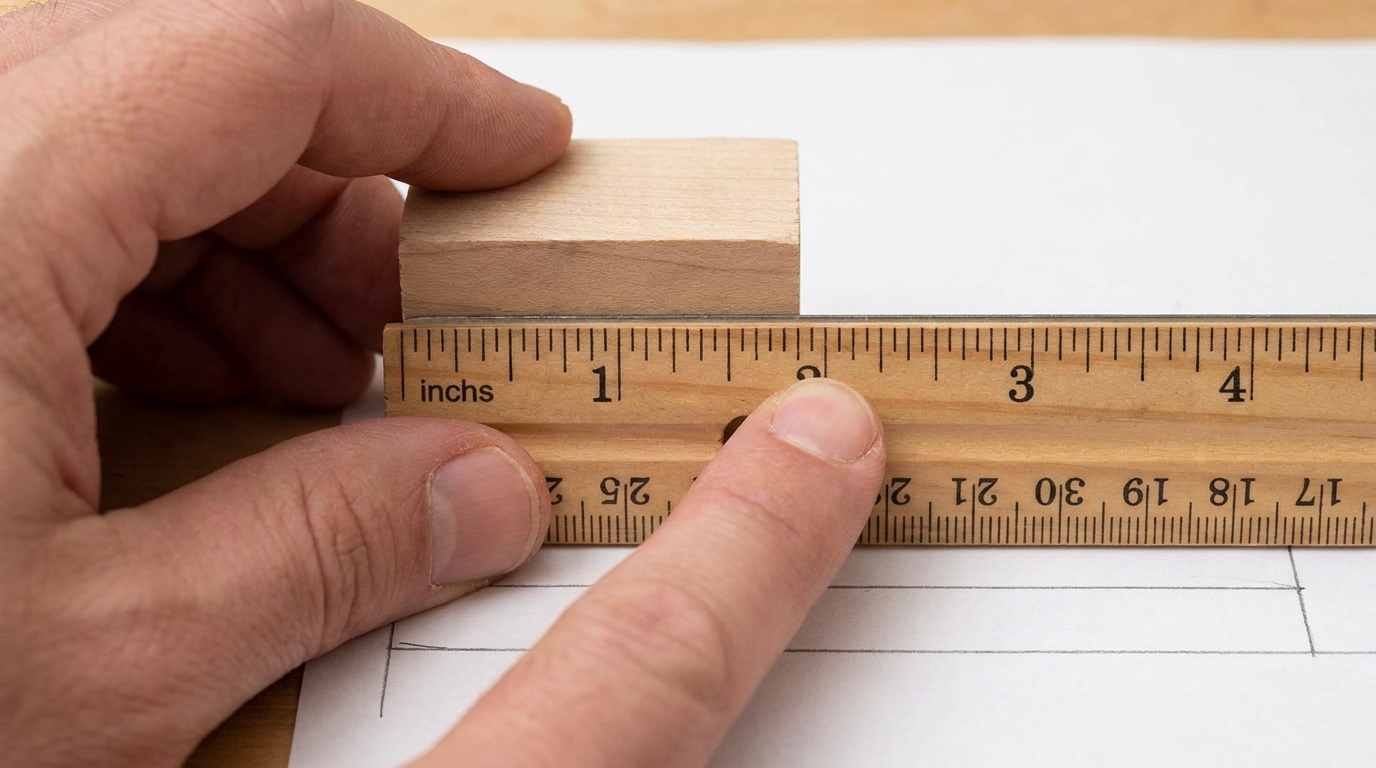
Learning how to read a ruler is an essential skill used in school, construction, design, tailoring, engineering, and many daily activities. A ruler helps measure length, width, height, and distance with accuracy, making it one of the most commonly used measuring tools worldwide. Although rulers may appear simple, many people struggle to understand measurement lines, fractions, and unit markings correctly. Knowing how to measure accurately improves precision and reduces mistakes in projects and calculations. Whether using inches or centimeters, understanding ruler markings becomes easier with practice and careful observation. Mastering this skill helps students, professionals, and everyday users complete tasks confidently while improving accuracy in personal, educational, and professional environments.
Understanding the Basic Structure of a Ruler
Before learning how to read a ruler accurately, it is important to understand its basic structure and layout. Most rulers include two measurement systems, including inches on one side and centimeters or millimeters on the other. The ruler contains numbered markings along straight edges, with smaller lines placed between larger numbered sections. Each line represents a specific measurement value depending on the ruler type. Inch rulers often divide measurements into fractions such as halves, quarters, eighths, and sixteenths. Metric rulers divide measurements into millimeters and centimeters for easier decimal-based calculations. Understanding the layout of measurement lines helps users identify distances correctly and avoid confusion during measuring tasks or school assignments.
Learning the Difference Between Inches and Centimeters
One important part of understanding how to read a ruler involves recognizing the difference between inches and centimeters. Inches belong to the imperial measurement system commonly used in countries like the United States, while centimeters are part of the metric system used internationally. Inch rulers contain larger numbered sections divided into smaller fractional lines, while centimeter rulers use evenly spaced decimal measurements. Each centimeter includes ten millimeters represented by smaller marks between numbered lines. Metric rulers are often considered easier because of their decimal structure and consistent spacing. Understanding both systems helps individuals measure accurately in different situations, especially when working with international standards, educational materials, or technical projects requiring precise measurements.
How Fraction Lines Work on Inch Rulers
Fraction lines are often the most confusing part when learning how to read a ruler using the imperial system. Between each inch mark, smaller lines represent fractions of an inch, including one-half, one-quarter, one-eighth, and one-sixteenth divisions. The longer lines usually indicate larger fractions, while shorter lines represent smaller measurements. For example, the middle line between two inch numbers represents one-half inch. Smaller lines between those marks divide the space further into additional fractions. Understanding these divisions requires careful observation and practice. Once users recognize how fractional spacing works, reading inch measurements becomes much easier and more accurate during crafts, woodworking, construction, and educational activities involving measurement tasks.
Reading Metric Measurements Correctly
Metric rulers are generally easier for beginners because they follow a decimal-based measurement system. Learning how to read a ruler using centimeters and millimeters involves understanding that each centimeter equals ten millimeters. Larger numbered lines represent centimeters, while the smaller marks between them indicate individual millimeters. Measuring with the metric system allows for greater simplicity when converting or calculating dimensions because the spacing remains consistent throughout the ruler. Many schools and scientific industries prefer metric measurements because they reduce confusion and support accurate calculations easily. By carefully aligning the object with the ruler’s starting point and reading the corresponding measurement mark, users can measure distances quickly and accurately using metric rulers.
Proper Positioning for Accurate Measurement
Correct ruler positioning plays an important role in accurate measuring. Many mistakes happen because users fail to align objects properly with the ruler’s starting point. When learning how to read a ruler, it is essential to place the object or edge directly at the zero mark instead of the ruler’s physical edge. Some rulers begin slightly before the actual zero line, which can create inaccurate results if ignored. Users should also keep the ruler straight and avoid viewing measurements from an angle because this can distort visual accuracy. Proper positioning improves consistency and reduces errors significantly. Careful alignment ensures precise measurements during school assignments, design projects, construction tasks, or everyday household activities requiring accuracy.
Common Mistakes People Make While Using Rulers
Many people make simple but important mistakes when trying to measure accurately with a ruler. One common problem involves starting measurements from the ruler edge instead of the zero line. Another frequent issue occurs when users confuse inch fractions or miscount metric divisions between centimeter marks. Looking at the ruler from an incorrect angle can also create reading errors because visual distortion affects accuracy. Learning how to read a ruler correctly requires patience, concentration, and familiarity with measurement patterns. Rushing through measurements often leads to incorrect results, especially during technical or educational tasks. Developing careful measuring habits helps users avoid repeated mistakes while improving overall accuracy and confidence in measurement-related activities.
Why Measurement Skills Matter in Daily Life
Measurement skills are useful in many everyday situations, making it important to understand how to read a ruler properly. Students use rulers during mathematics, science, and art assignments, while professionals rely on accurate measurements in engineering, architecture, tailoring, and manufacturing industries. Home improvement projects, furniture arrangement, and craft activities also require precise measuring skills to avoid mistakes and wasted materials. Even simple tasks such as wrapping gifts or checking package sizes involve measurement understanding. Strong ruler-reading skills support problem-solving, planning, and attention to detail in daily activities. Learning accurate measurement techniques early helps individuals become more confident and capable when handling tasks involving dimensions, distances, or physical object sizing.
Teaching Children How to Read a Ruler
Teaching children how to read a ruler requires patience, visual explanation, and practical activities that make learning enjoyable and understandable. Beginners often benefit from starting with centimeter rulers because metric measurements are easier to recognize and count. Hands-on exercises involving objects such as pencils, books, or toys help children understand measurement concepts more naturally. Teachers and parents can gradually introduce inch fractions after children become comfortable with basic ruler use. Encouraging regular practice improves familiarity with measurement lines and builds confidence over time. Positive learning experiences help children develop mathematical thinking and observation skills. Strong measurement understanding during childhood creates a useful foundation for future educational and practical applications involving accuracy.
Improving Accuracy Through Practice and Observation
Like many practical skills, learning how to read a ruler improves significantly through regular practice and careful observation. Repeated measuring exercises help users recognize patterns, understand ruler markings, and develop greater confidence with both metric and imperial systems. Comparing measurements between rulers and checking results carefully can also improve precision over time. Practice teaches individuals to identify small differences between fractions or millimeter markings more effectively. Observation skills become especially important during detailed work involving technical drawings, crafts, or scientific measurements. The more familiar users become with ruler layouts and measurement techniques, the easier and faster accurate reading becomes. Consistent practice helps turn ruler reading into a reliable everyday skill.
Conclusion
Understanding how to read a ruler is a valuable skill that supports accuracy, organization, and confidence in many aspects of life. From school assignments to professional projects, rulers help people measure dimensions carefully and complete tasks with precision. Learning the differences between inch and metric systems, recognizing fraction lines, and positioning rulers correctly all contribute to better measurement results. Avoiding common mistakes and practicing regularly can improve accuracy significantly over time. Whether used in construction, design, tailoring, or daily household activities, measurement skills remain essential for problem-solving and planning. Mastering ruler reading helps individuals perform tasks more effectively while building practical knowledge useful in countless real-world situations every day.