
What Is a Taper Haircut?
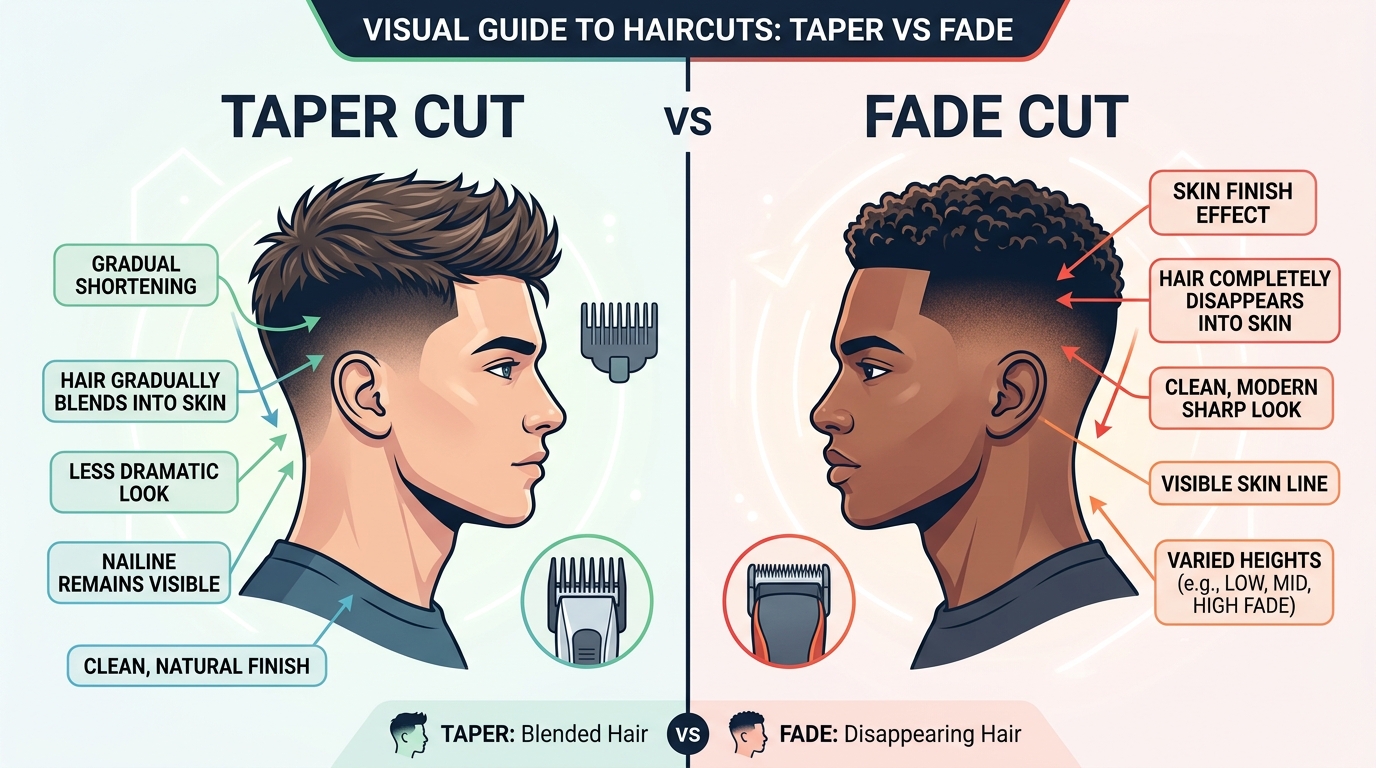
A taper haircut is a classic hairstyle technique where the hair gradually shortens from the top down toward the neckline and around the ears. The transition is subtle and smooth, creating a polished appearance without exposing much of the scalp. Taper haircuts are often preferred by individuals who want a professional and versatile style suitable for both formal and casual settings. Because the hair remains relatively longer on the sides compared to many fade styles, a taper provides a softer and more conservative look. This timeless haircut has remained popular for decades due to its clean finish and adaptability.
What Is a Fade Haircut?
A fade haircut involves a more dramatic transition from longer hair on top to very short or even skin-level hair on the sides and back. The defining feature of a fade is the seamless blending that gradually disappears into the skin or nearly skin-length hair. Different fade variations, including low, mid, and high fades, offer varying levels of contrast and visual impact. This haircut creates a sharp, modern appearance that highlights facial features and emphasizes the hairstyle on top. Many people choose fades because they deliver a fresh, fashionable look that works well with contemporary grooming trends.
The Main Difference Between Taper vs Fade
When comparing taper vs fade, the primary difference lies in the intensity of the transition. A taper creates a gentle reduction in hair length, while a fade produces a much shorter and more noticeable graduation. Tapers generally maintain more hair around the sides and neckline, resulting in a natural appearance. Fades, on the other hand, remove more bulk and create stronger contrast between the top and sides. Although both techniques involve blending, the fade is typically more striking and modern. Understanding this distinction helps individuals choose a haircut that aligns with their personal style preferences and grooming goals.
Which Style Looks More Professional?
Professional appearance often plays a major role when selecting a haircut. In many workplaces, a taper haircut is considered slightly more traditional and conservative because it maintains a fuller shape around the head. Its subtle transitions create a refined look that pairs well with business attire and formal environments. A fade can also appear professional when executed neatly, particularly low fades that preserve some length on the sides. However, high fades tend to draw more attention and create a bolder visual statement. Ultimately, both styles can be workplace-friendly when tailored appropriately to individual preferences and industry standards.
Maintenance Requirements for Taper and Fade Haircuts
Maintenance is an important consideration in the taper vs fade discussion. Taper haircuts generally require fewer barber visits because the gradual transition remains attractive as the hair grows. The style continues to look neat for several weeks without appearing overly grown out. Fade haircuts, especially skin fades, require more frequent touch-ups to maintain their sharp and clean appearance. As the hair grows back, the contrast becomes less defined, reducing the impact of the haircut. Individuals with busy schedules may appreciate the lower maintenance nature of a taper, while those seeking maximum sharpness often prefer regular fade maintenance.
Best Hair Types for a Taper Haircut
One of the advantages of a taper haircut is its versatility across different hair textures and densities. Whether someone has straight, wavy, curly, or thick hair, a taper can enhance natural movement while maintaining a clean silhouette. The gradual reduction in length helps balance volume and create a structured appearance without removing too much hair. People who prefer classic hairstyles often find that tapers complement their natural hair patterns effectively. Additionally, tapers provide flexibility for styling various looks, making them an excellent option for individuals who enjoy changing their hairstyle while preserving a professional foundation.
Best Hair Types for a Fade Haircut
Fade haircuts work exceptionally well on many hair types, but they are particularly effective for individuals who want to showcase texture and contrast. Curly, coiled, and thick hair often benefits from fades because the shorter sides emphasize the volume and detail on top. Straight hair can also look striking with a fade, especially when combined with modern styles such as pompadours or textured crops. Because fades create a stronger separation between lengths, they can make hairstyles appear more defined and intentional. This characteristic has contributed significantly to the fade’s popularity among younger generations and trend-conscious individuals.
How Face Shape Influences the Right Choice
Face shape can play a significant role when deciding between a taper and a fade. Individuals with round faces often benefit from styles that create height and definition, making certain fade variations an appealing option. Those with oval face shapes typically have the flexibility to wear either haircut successfully. Square faces pair well with both styles because strong jawlines complement clean transitions. A taper may soften angular features and provide balance, while a fade can enhance facial structure and create a more dramatic effect. Consulting a skilled barber helps ensure the chosen haircut complements individual facial proportions effectively.
Choosing Between Taper vs Fade for Your Lifestyle
The final decision between taper vs fade often depends on lifestyle, personal taste, and grooming habits. People who prefer timeless styles with minimal upkeep may find a taper haircut more suitable for their daily routine. Those who enjoy contemporary fashion trends and do not mind frequent barber appointments may gravitate toward a fade. Both haircuts offer excellent versatility and can be customized to suit different personalities and preferences. Understanding the strengths of each option allows individuals to make a confident choice that aligns with their appearance goals, maintenance expectations, and overall sense of style.
Conlusion
In the comparison of taper vs fade, neither haircut is universally better than the other. Each offers unique advantages that appeal to different individuals and situations. A taper provides a subtle, classic, and low-maintenance appearance, while a fade delivers a sharper, more modern, and attention-grabbing finish. By considering factors such as hair type, face shape, maintenance requirements, and personal style preferences, you can select the haircut that best suits your needs. Whether you choose a taper or a fade, both styles remain popular choices that can enhance your overall look and leave a lasting impression.